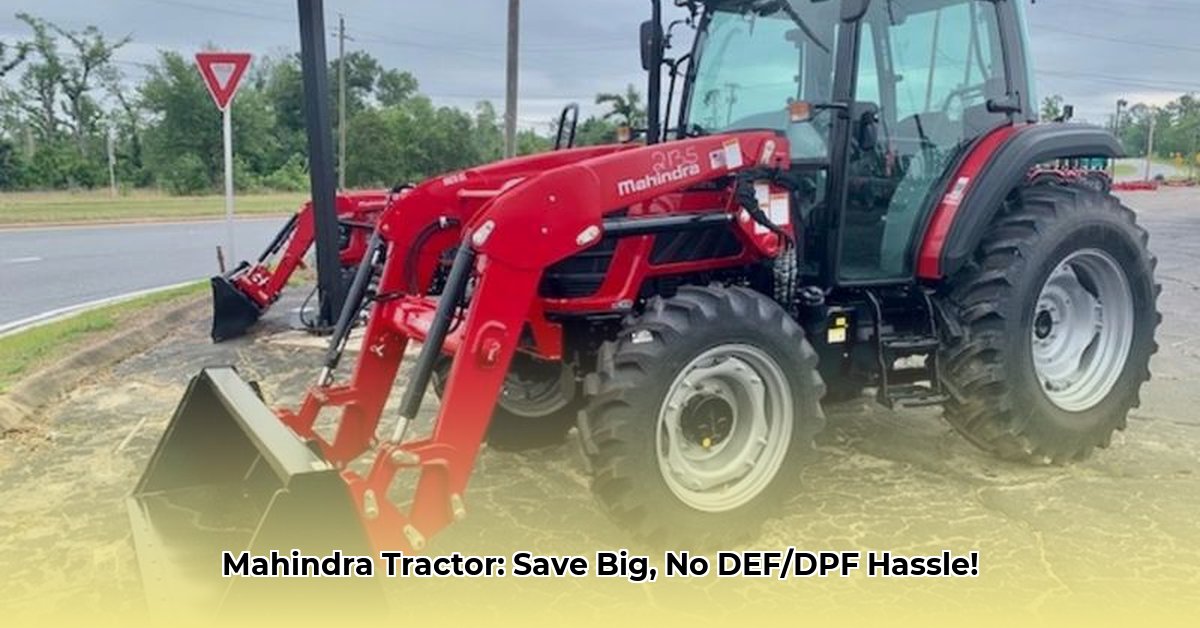
Mahindra Cabin Tractors: A Deep Dive into the Savings
Mahindra cabin tractors are disrupting the agricultural machinery market, particularly in the US, by omitting Diesel Exhaust Fluid (DEF) and Diesel Particulate Filters (DPF) systems. This design choice translates to significant cost savings for farmers. Lower initial purchase prices, reduced maintenance expenses (no specialized fluids or expensive filter replacements), and less downtime contribute to a more profitable operation. This straightforward approach appeals to budget-conscious farmers and those operating smaller farms. However, the long-term environmental implications of this design warrant further investigation, as regulatory landscapes evolve. Are the long-term environmental impacts worth the immediate cost savings, or is this short-sighted? That's the question many are considering. For more Mahindra tractor pricing, check out this helpful resource.
Comparing Mahindra to the Competition: A Balanced Look
Direct comparisons between Mahindra and competitors like John Deere or Case IH depend heavily on specific needs and operational context. This section will leverage independent data to compare factors like horsepower, lift capacity, and overall cost of ownership, drawing from verifiable studies and expert opinions.
In the Indian market, the Mahindra Arjun Novo 605 Di-i is a popular choice due to its competitive price point and performance for its class. However, for larger farms or more demanding operations, higher-horsepower models from competitors may be more suitable. The US market shows a different dynamic. The absence of DEF/DPF systems is a major selling point, offering considerable cost advantages. But, this necessitates careful consideration of long-term parts availability and the possibility of future emissions regulations. Will these long-term factors outweigh the upfront savings? This is crucial for any potential buyer.
Mahindra Tractor Features: A Detailed Overview
Mahindra cabin tractors emphasize comfort, practicality, and durability. Features vary slightly across models and regions, but common aspects include:
- Comfortable Cab: Air conditioning, sound dampening, and ergonomic seating reduce operator fatigue during extended workdays.
- Powerful Engine: Efficient power delivery is a key feature, achieved without the added complexity of DEF/DPF systems. What is the precise horsepower output on different models, and how does this compare to competitors?
- Durable Build: Mahindra tractors are known for their robustness and resilience, suitable for challenging farm conditions.
- Warranty: Extended powertrain warranties (ranging from 5-7 years depending on model and region) offer peace of mind.
Mahindra's Market Strategies: Adapting to Regional Needs
Mahindra’s marketing strategies vary significantly depending on the market. In India, emphasis is placed on affordability and feature value, targeting budget-conscious consumers. In the US market, the selling point centers around the absence of DEF/DPF systems, highlighting simplicity and cost savings. This adaptability demonstrates a keen understanding of diverse market demands.
Long-Term Considerations: Factors Beyond Initial Cost
While the immediate cost savings are attractive, long-term factors demand careful consideration:
- Horsepower: For large-scale operations, higher horsepower options from competitors might offer greater efficiency.
- Parts Availability: Researching local dealer support and parts inventory is crucial to avoid potential delays or difficulties.
- Regulation Changes: Staying informed about potential changes in environmental regulations is essential. Data on potential future regulations and their impact on Mahindra tractors would provide insightful context.
Making the Right Choice: Actionable Steps
This isn't just a tractor review; it's a decision-making guide. Farmers should:
- Assess needs: Carefully analyze the specific demands of your farming operation.
- Compare costs: Perform a thorough analysis of both upfront and long-term costs, including maintenance, fuel consumption, and potential resale value.
- Seek farmer input: Consult with fellow farmers who own Mahindra or competitor tractors. Obtain their long-term cost of ownership insights to contextualize your decision.
- Visit dealerships: Visit local Mahindra and competitor dealerships to assess their service networks and parts availability.
- Consider long-term implications: Carefully weigh the potential impact of future regulations and parts availability.
By following these steps, farmers can make an informed decision that aligns with their individual needs and long-term goals. A Mahindra tractor may be the perfect fit, but thorough research is crucial for a successful investment.